
Restaurant Website vs Zomato & Swiggy: Do You Still Need Your Own Website?
Discover why restaurants need their own website alongside Zomato & Swiggy. Learn key benefits, cost savings, and strategies to reduce platform dependency.
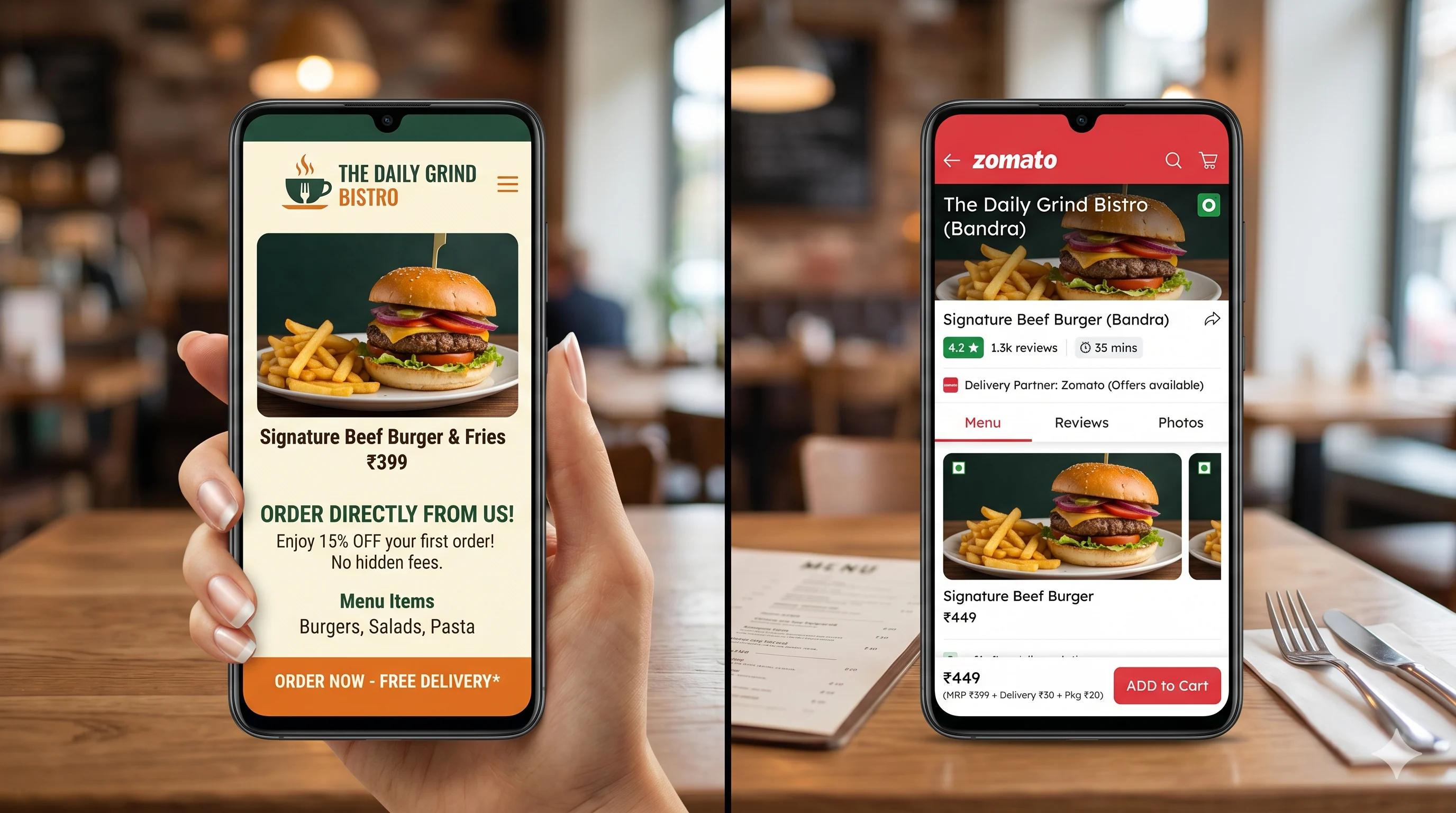
Zomato and Swiggy bring customers to your restaurant. But they take heavy fees from every order.
Many restaurant owners wonder if they need their own website. The answer is yes. Here's why your restaurant website matters more than ever.
Why Restaurant Website Benefits Matter More Than Platform Exposure
Food delivery platforms are useful. They give you access to millions of customers. But they control your business relationship with those customers.
When someone orders through Zomato, Zomato owns that customer. When they order through your website, you own the relationship.
Restaurant website benefits include keeping your profits and building direct customer relationships. These advantages grow over time.
The biggest benefit? Fee savings. Every direct order keeps more money in your pocket.
Restaurant Website vs Zomato: Key Differences
Zomato excels at customer discovery. People browse Zomato when they want to try something new.
Your website excels at customer retention. Once someone knows your restaurant, your website gives them the best ordering experience.
Zomato advantages:
- Large customer base
- Strong search features
- Built-in payment processing
- Customer reviews and ratings
Restaurant website advantages:
- No commission fees
- Full customer data access
- Complete brand control
- Direct communication with customers
- Custom loyalty programs
The smart approach uses both. Zomato finds new customers. Your website keeps them coming back.
Restaurant Website vs Swiggy: Similar Platform, Same Problems
Swiggy works like Zomato from a restaurant perspective. High commission rates and good customer reach. But limited control over the customer relationship.
The main issue with both platforms is dependency. They can change commission rates or modify policies without warning. Your business adapts to their changes.
Your website protects against this dependency. You set the rules on your platform.
How Restaurant Websites Generate Direct Orders
Getting direct orders requires a strategy. You can't just build a website and expect customers to find it.
Make direct ordering more attractive. Offer menu items only on your website. Provide faster delivery for direct orders. Give discounts that offset the convenience of platforms.
Collect customer data during dine-in visits. Use QR code menus that capture phone numbers and email addresses. Send follow-up messages about online ordering options.
Optimize for local search. When people search "restaurants near me," your website should appear in results.
Build an email and WhatsApp list. Send weekly menu updates and special offers to encourage direct ordering.
Essential Restaurant Website Features
Your restaurant website needs specific features to compete with established platforms.
Simple online ordering system. The checkout process should take under three minutes. Accept multiple payment methods. Send order confirmations fast.
Mobile-optimized design. Most food orders happen on smartphones. Your website must work on small screens.
Clear menu with high-quality photos. Professional food photography increases order values. Show accurate prices and detailed descriptions.
Real-time order tracking. Customers expect updates about preparation and delivery status.
Customer account creation. Let returning customers save their addresses and payment methods for faster ordering.
Integration with delivery management. Connect your website orders with your kitchen operations and delivery tracking.
Our web development services focus on these essential features for restaurant success.
Local SEO Advantages of Restaurant Websites
Google prioritizes local businesses in search results. Your restaurant website can capture this local traffic.
Google My Business integration. Link your website to your Google Business Profile. This improves your visibility in local searches.
Location-specific content. Include your neighborhood name and nearby landmarks throughout your website.
Customer review display. Show Google reviews on your website. This builds trust and improves search rankings.
Schema markup implementation. Add structured data to help Google understand your restaurant information and hours.
Fast loading speed. Google favors websites that load quickly on mobile devices.
Building Customer Loyalty Through Your Website
Platforms make every restaurant look similar. Your website lets you stand out and build lasting customer relationships.
Personalized recommendations. Track what customers order. Suggest similar items or complementary dishes.
Loyalty point systems. Reward frequent direct orders with points that convert to discounts or free items.
Exclusive menu items. Offer special dishes only available through direct ordering to encourage website usage.
Birthday and anniversary promotions. Use customer data to send personalized offers on special dates.
Order history access. Let customers easily reorder their favorite meals with one click.
Connecting your website with QR menu systems makes this data collection seamless during dine-in visits.
Cost Analysis: Website Investment vs Commission Savings
Building a restaurant website requires upfront investment. But commission savings add up quickly.
Commission costs on platforms: Popular delivery platforms charge restaurants between 15% to 30% per order. This reduces profit margins on each sale.
Website development costs: A professional restaurant website costs less than what you pay in commissions over a few months.
Ongoing savings: Every direct order saves the commission amount. These savings accumulate monthly.
Higher profit margins: Direct orders often have larger order values. Customers don't see delivery fees and platform surcharges.
Integration with Current Restaurant Operations
Your website should simplify operations, not complicate them.
POS system connection. Online orders should appear in your kitchen management system automatically.
Inventory synchronization. When you run out of ingredients, those dishes should become unavailable on your website immediately.
Staff training requirements. Your team needs to understand how to manage online orders alongside dine-in customers.
Delivery coordination. Integrate your website with delivery management tools or your delivery team.
Payment processing. Choose secure payment gateways that customers trust. These should integrate with your accounting systems.
Common Restaurant Website Mistakes to Avoid
Many restaurants waste money on websites that don't generate orders.
Overcomplicating the design. Hungry customers want simple navigation. Complex layouts reduce conversions.
Ignoring mobile optimization. A website that doesn't work on phones loses most potential orders.
Poor menu photography. Low-quality images reduce order values and customer interest.
Slow loading times. Customers abandon websites that take too long to load.
Complicated checkout process. Asking for too much information during ordering reduces completion rates.
No clear contact information. Customers need easy ways to reach you for order questions or issues.
Future-Proofing Your Restaurant Business
The food delivery landscape changes rapidly. New platforms emerge, and existing ones modify their terms.
Platform independence. Having your own website reduces dependency on external platforms and their policy changes.
Direct customer relationships. You control communication with your customers regardless of platform changes.
Flexibility for new features. Add new services like catering or event booking without platform restrictions.
Data ownership. Your customer data helps you make informed business decisions about menu items and pricing.
Brand control. Tell your restaurant's story and showcase your unique value proposition without platform limitations.
For comprehensive digital marketing support, explore our SEO services to maximize your online visibility.
The Smart Strategy: Using Both Platforms and Websites
The most successful restaurants don't choose between platforms and websites. They use both strategically.
Platforms for discovery. New customers often find restaurants through Zomato and Swiggy browsing.
Websites for retention. Convert platform customers to direct customers through better service and incentives.
Cross-promotion opportunities. Mention your website and direct ordering options in platform communications when possible.
Performance tracking. Monitor which channel brings the most profitable long-term customers.
FAQs
Need help with your digital presence?
We build websites, run SEO, and deploy AI solutions for businesses across India.